

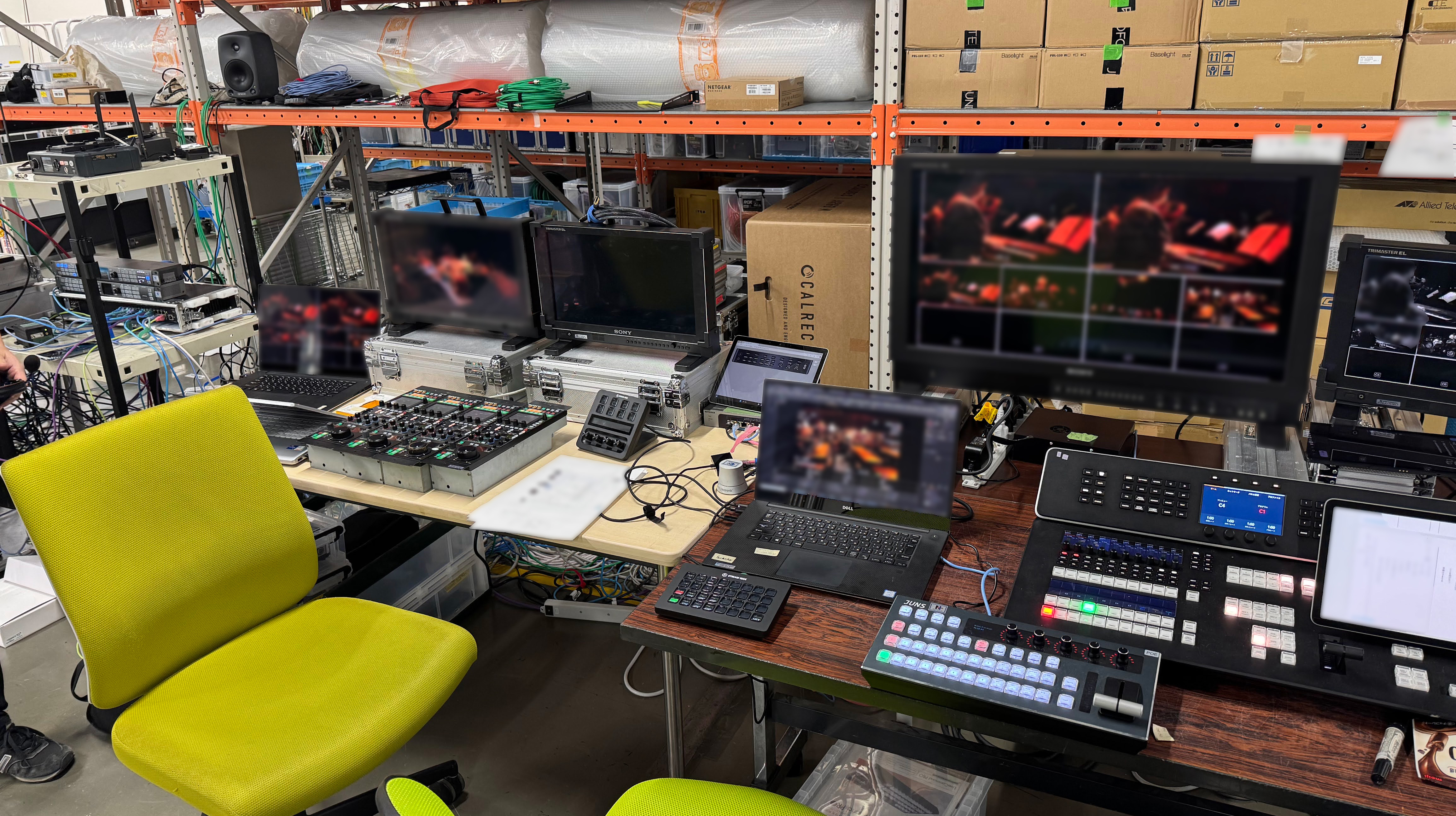
At Shunkei, we have developed Shunkei VTX, a low-latency IP video transmission device for moving platforms such as drones and RC cars. We are focused on reducing end-to-end delay (Glass-to-Glass latency): from the moment light enters the camera, through IP transport to a remote site, until it appears as light on the display again.
In this project, Shunkei conducted joint research with NHK Technologies, Inc. and participated in the company's IP remote production demonstration. The demonstration used a full-IP remote production workflow for a live performance at Billboard Tokyo in Roppongi, and delivered web streaming and 8K live viewing with immersive audio.
What Is IP Remote Production?
In IP remote production, audio and video are transmitted over IP networks, allowing personnel who traditionally had to stay on site, such as camera operators and sound engineers, to work from a separate location. This can significantly reduce transport and setup workload, while improving production quality by using non-temporary facilities for audio and video engineering.
Challenges in IP Remote Production
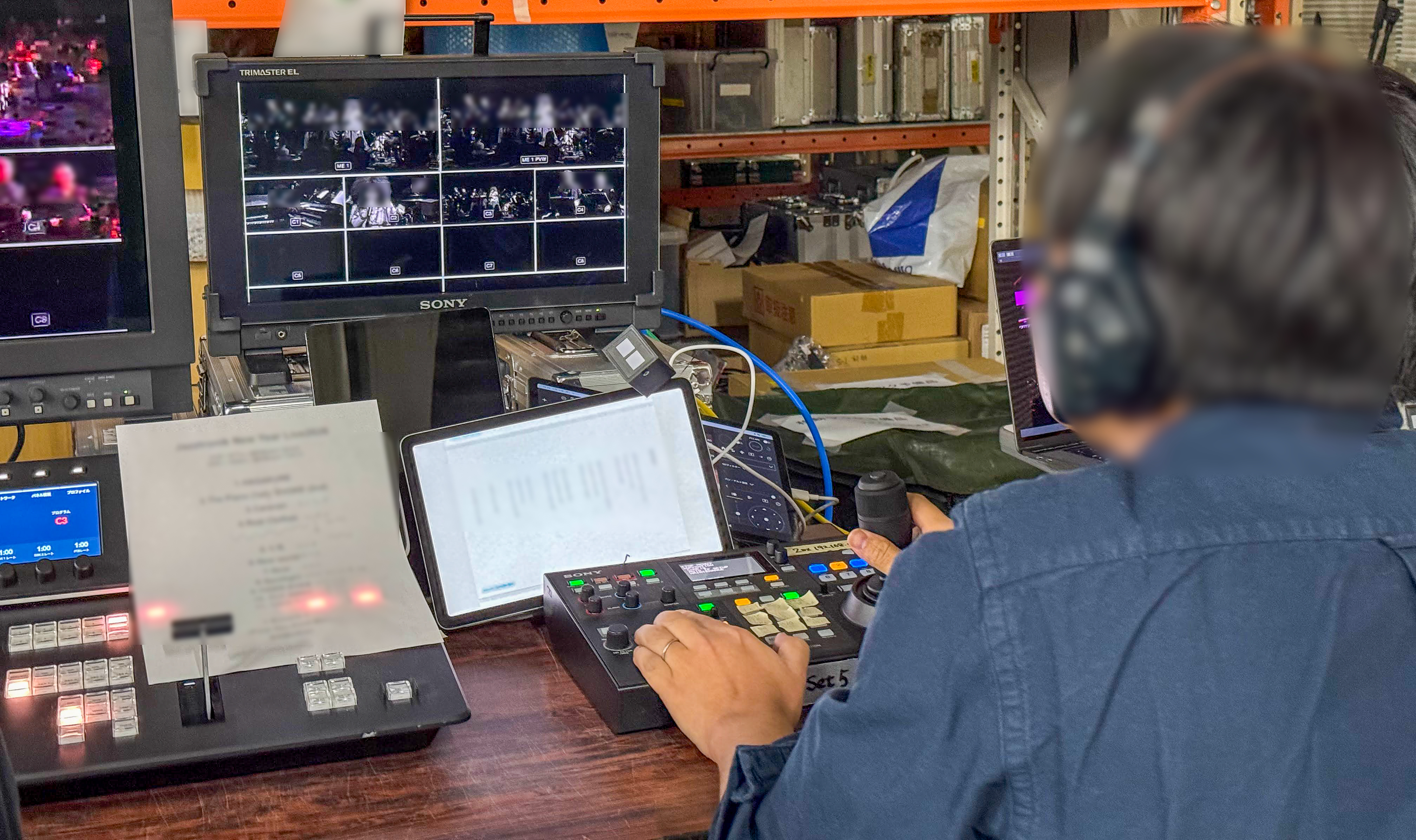
In remote production, camera operators perform pan/tilt/zoom (PTZ) operations remotely. Program switching and mixing are also done remotely. A major challenge here is video latency. When operators must control cameras while viewing delayed video, it becomes difficult to perform fast and dynamic camera work, track subjects while zooming, or stop quickly. Compared with having operators on site, camera work tends to become more conservative and less responsive.
For video switching as well, feeds sometimes need to be switched immediately when problems occur, so video latency is a critical issue.
How Shunkei VTX Was Used
In this demonstration, we applied Shunkei's low-latency video transport technology to deliver low-latency IP return feeds for switchers and camera operators.
Switcher Motion-to-Photon Latency
Approx. 20ms
PTZ Motion-to-Photon Latency
150-200ms
The Motion-to-Photon latency from operating the switcher to seeing the switched remote feed on the local display was approximately 20 ms. Encoding and decoding delay inside Shunkei VTX was below 1 ms, and the remaining delay is considered to come from frame buffering in the switcher, display buffering, and mixer buffer delay.
For camera operators, Motion-to-Photon latency including PTZ operation and actuator delay was approximately 150-200 ms.
In this test, network latency was only a few milliseconds because traffic was looped back within tens of kilometers inside the network.
Operator Feedback
"We can now achieve camera work that was not possible before. It feels almost the same as operating on site."
"Once you experience this, you cannot go back. It is dramatically more comfortable than conventional systems."
"The feed switches the instant I operate it. The operational feel is no different from working in the station."
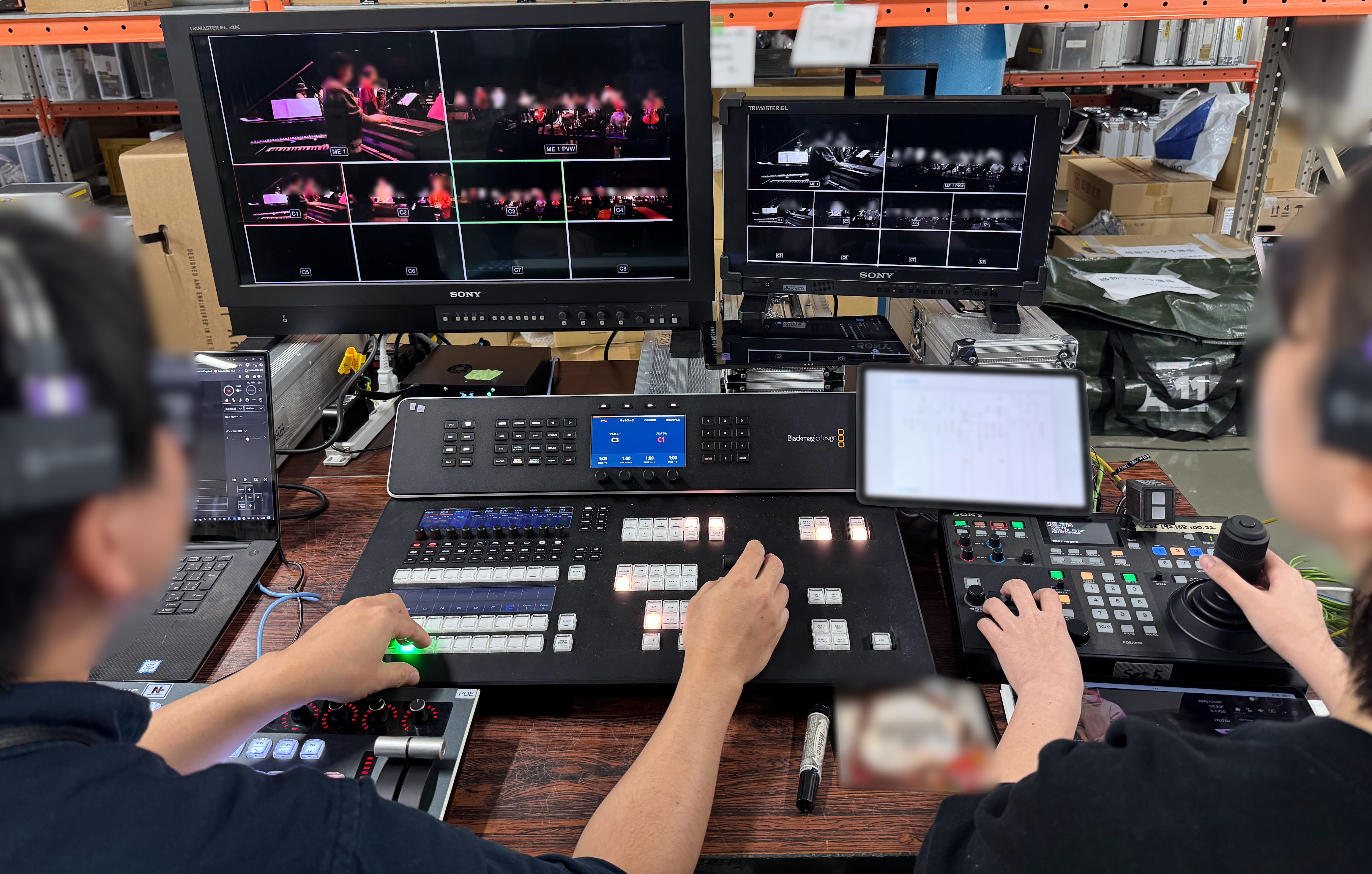
At Shunkei, we are developing video transmission systems for remote control of high-speed moving platforms such as racing drones that fly at over 100 km/h. We believe the same approach is effective for camera operation and switching in remote production, where humans must perform real-time feedback control.
Shunkei will continue creating value by reducing those critical 100 milliseconds of delay.